
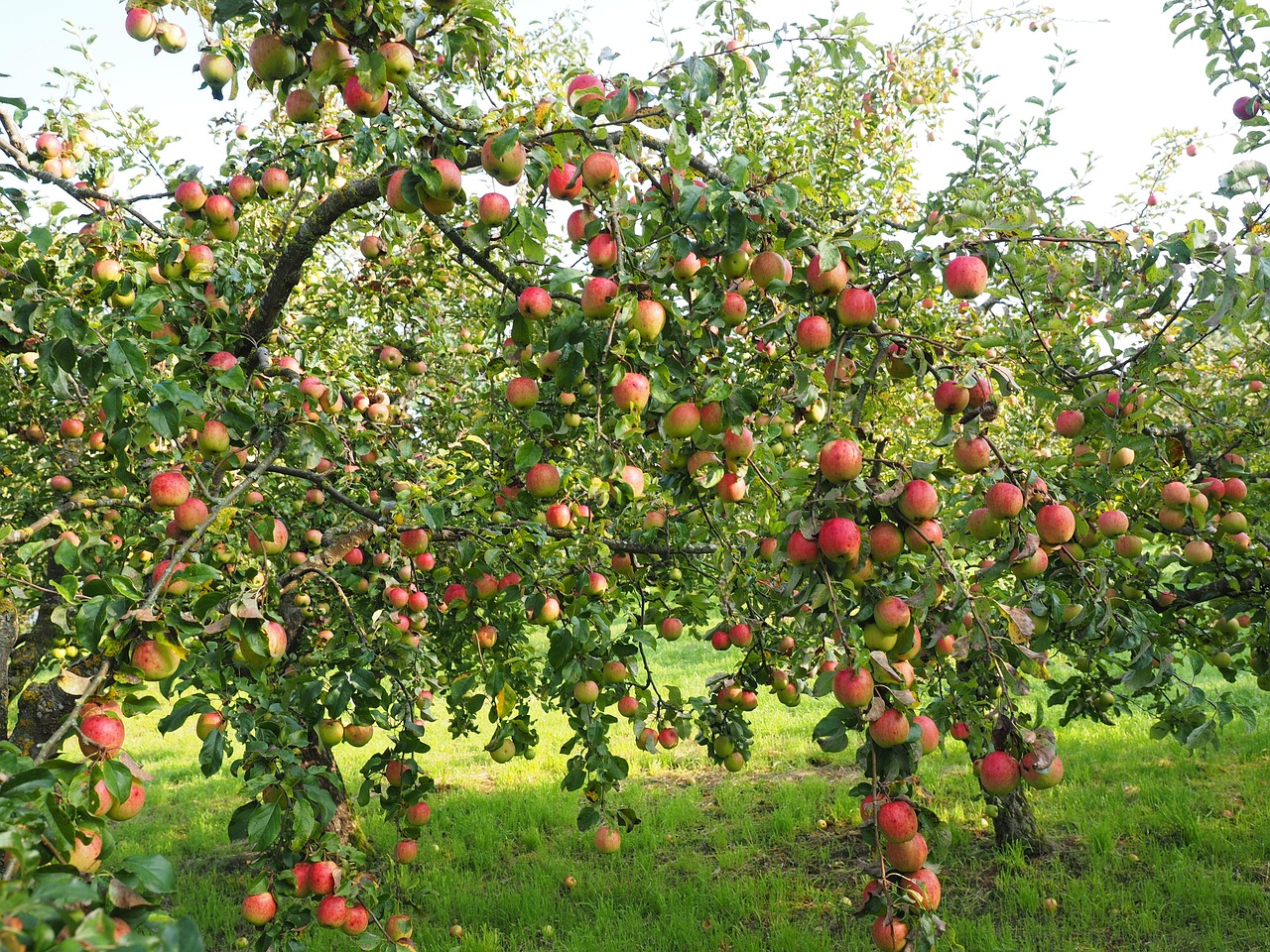
Growing apples at home sounds wonderfully simple. Plant a few trees, give them sunshine and water, and wait for baskets of crisp fruit to appear each fall. In reality, a productive backyard orchard begins long before the first apple tree goes into the ground.
Apple trees can live and produce for decades, which makes the decisions you make at planting time especially important. A tree planted in the wrong place may struggle with poor drainage. The wrong variety may never receive enough winter chill. Planting only one incompatible cultivar could leave you with plenty of blossoms but very little fruit.
The good news is that most of these problems are preventable.
If you are dreaming of homemade apple pies, fresh-picked fruit, or simply a few beautiful trees covered in spring blossoms, careful preparation can save years of frustration. Before reaching for the shovel, learn how to avoid these five costly mistakes when starting a backyard apple orchard.
1. Choosing Apple Varieties Before Considering Your Climate
One of the most common mistakes beginners make is choosing an apple simply because they enjoy eating it.
Flavor matters, of course, but climate matters first.
Apple varieties differ greatly in their growing requirements. Some thrive in regions with long, cold winters, while others are better adapted to areas with comparatively mild winter temperatures.
Understand Chill Requirements
Apple trees need exposure to a certain amount of cool winter weather before they can grow and flower normally in spring. This is commonly described in terms of chill hours or other chilling models.
A variety requiring substantial winter chilling may perform poorly in a warm climate. Symptoms can include:
- Weak or uneven bud growth
- Delayed flowering
- Poor fruit set
- Irregular leaf development
- Reduced harvests
On the other hand, low-chill apples may not always be the best choice for very cold regions either.
Before purchasing trees, check which apple varieties perform reliably in your growing region. Local nurseries, university extension recommendations, and experienced growers in your area can often provide useful guidance.
Think Beyond Flavor
When comparing apple varieties, consider more than whether you prefer sweet or tart fruit.
Look at:
- Cold hardiness
- Chill requirements
- Disease resistance
- Harvest season
- Mature tree size
- Storage quality
- Pollination compatibility
A disease-resistant variety can be particularly valuable in a home orchard because it may reduce the amount of spraying and maintenance needed throughout the growing season.
Choosing apples suited to your climate gives your orchard a strong foundation before planting even begins.
2. Planting Without a Pollination Plan
Imagine waiting several years for your young apple trees to mature. Spring finally arrives, the branches are covered with beautiful blossoms, and yet only a handful of apples develop.
The problem may not be your soil, fertilizer, or pruning.
It could be pollination.
Most apple varieties produce better crops when pollen comes from another compatible apple variety flowering at roughly the same time.
Why One Apple Tree May Not Be Enough
Many commonly grown apples are not reliably self-fertile. Even varieties described as partially self-fertile often produce heavier crops when another compatible cultivar is nearby.
That means a backyard orchard should usually be planned with pollination in mind from the beginning.
You might plant:
- Two compatible apple varieties
- Several varieties with overlapping bloom periods
- A suitable crabapple nearby that can provide compatible pollen
Pollinating insects, particularly bees, then carry pollen between blossoms.
Do Your Trees Bloom at the Same Time?
Simply planting two different apples does not automatically guarantee successful pollination.
Some varieties bloom early, others in the middle of the apple flowering season, and others later. Their bloom periods need to overlap sufficiently for pollen transfer to occur.
Certain apple cultivars also have unusual pollen characteristics and are poor pollinizers for other varieties, so compatibility should be checked before buying.
Planning pollination before planting is much easier than discovering years later that your orchard needs another tree.
3. Picking the Wrong Location for Your Backyard Orchard
Apple trees are long-term residents of the garden. Moving a mature tree later is difficult, so choosing the right location from the beginning deserves serious thought.
The prettiest empty corner of your backyard is not necessarily the best orchard site.
Give Apple Trees Plenty of Sunlight
For strong growth, flowering, and fruit production, apples generally perform best in full sun.
Aim for a location receiving at least six hours of direct sunlight daily, with more often being beneficial.
Trees grown in excessive shade may become thin and weak while producing fewer flowers and poorer-quality fruit.
Sunlight also helps foliage and fruit dry more quickly after rain, which can reduce conditions favorable to certain fungal diseases.
Avoid Waterlogged Soil
Apple roots need moisture, but they also need oxygen.
Soil that remains saturated for long periods can create serious root problems and may eventually weaken or kill a tree.
Before planting, observe the area after heavy rain.
Does water disappear reasonably quickly, or does it remain standing for hours or days?
If drainage is poor, consider another site or improve the planting area appropriately rather than assuming the tree will simply adapt.
Be Careful With Low Spots
Cold air tends to collect in low areas of the landscape. These frost pockets can be problematic when apple trees begin flowering in spring.
A late frost during bloom can damage flowers and dramatically reduce that year’s crop.
Where possible, choose a sunny, well-drained site with good air movement rather than the lowest portion of the property.
Allow Enough Space
A young apple tree may look tiny at the garden center, but it will not stay that way.
Spacing depends heavily on the rootstock and training system. Dwarf trees can fit into relatively small spaces, while vigorous standard-sized trees may eventually develop broad canopies.
Before planting, picture what the orchard could look like 10 or 15 years from now.
Will branches interfere with buildings?
Will trees shade one another?
Will you still have enough room to mow, prune, harvest, and move equipment between them?
Good spacing now prevents overcrowding later.
4. Ignoring Rootstock and Mature Tree Size
When shopping for apples, gardeners often concentrate on the variety name printed on the label.
Honeycrisp, Fuji, Gala, Granny Smith, or another favorite may get all the attention.
However, another part of that label can be just as important: the rootstock.
Most commercial apple trees are grafted. The fruiting variety forms the upper portion of the tree, while a different root system influences characteristics such as mature size, vigor, anchorage, and sometimes disease tolerance.
Dwarf Apple Trees
Dwarf trees are attractive to backyard gardeners because they remain relatively compact and are easier to harvest and prune.
They can also begin producing fruit relatively early.
However, some dwarfing rootstocks require permanent staking or another form of support.
Semi-Dwarf Apple Trees
Semi-dwarf trees offer a useful compromise for many home orchards.
They generally produce a substantial crop without becoming as enormous as traditional full-sized trees. They still require adequate space, but their height can often be managed more easily with regular pruning and training.
Standard Apple Trees
Standard trees can become large and long-lived.
They may be appropriate where plenty of land is available, but harvesting fruit from a tall mature tree can become difficult. Pruning and pest management may also require ladders and considerably more effort.
Before purchasing a tree, ask yourself:
How much room do I really have?
A smaller backyard does not mean you cannot grow apples. It simply means selecting an appropriate rootstock becomes even more important.
5. Planting Trees and Assuming Nature Will Handle Everything Else
Apple trees are not necessarily difficult to grow, but they are not completely hands-off either.
Planting is only the beginning.
A healthy orchard needs regular attention, especially while the trees are young and establishing their root systems.
Water Consistently During Establishment
Newly planted trees have limited roots and can dry out surprisingly quickly.
Instead of giving them shallow splashes of water every day, aim for thorough watering when needed so moisture reaches deeper into the root zone.
How frequently should you water?
That depends on soil type, rainfall, temperature, drainage, and tree size. The goal is moist soil rather than constantly soggy ground.
Checking the soil is usually more reliable than watering automatically according to the calendar.
Mulch Carefully
A layer of organic mulch can be extremely useful around young apple trees.
Mulch helps:
- Conserve soil moisture
- Reduce weed competition
- Moderate soil temperature
- Add organic matter as it decomposes
However, mulch should not be piled directly against the trunk.
Those familiar mulch “volcanoes” seen around trees can trap moisture against the bark and create conditions favorable to decay and other problems.
Spread mulch outward while leaving some breathing room around the trunk.
Begin Training Young Trees Early
Waiting until an apple tree becomes tangled and overgrown before thinking about pruning makes the job much harder.
Early training helps create a sturdy framework capable of supporting future crops.
Young trees usually benefit more from thoughtful structural pruning than aggressive cutting.
Remove damaged or poorly positioned growth when appropriate and encourage well-spaced branches with strong angles.
Your goal is not simply to make the tree look neat. You are building the framework that may carry apples for decades.
What Should You Do Before Buying Your First Apple Tree?
A little preparation can prevent most beginner orchard problems.
Before heading to the nursery, create a simple checklist:
- Determine your local climate and winter chill conditions.
- Identify apple varieties suited to your region.
- Choose compatible varieties for pollination.
- Measure the planting area.
- Check how much sunlight the site receives.
- Evaluate soil drainage.
- Decide whether dwarf, semi-dwarf, or standard trees fit your space.
- Plan access to water.
- Think about long-term pruning and harvesting.
- Leave enough room for each tree at maturity.
Spending an afternoon planning your orchard could save years of disappointment.
How Many Apple Trees Do You Need for a Backyard Orchard?
There is no single perfect number.
A backyard orchard might contain two carefully chosen trees or a dozen varieties ripening at different times.
For a small property, two or three compatible dwarf or semi-dwarf trees can provide an impressive amount of fruit once mature.
Gardeners with more room might choose several varieties that ripen throughout the season.
For example, planting early-, mid-, and late-season apples can spread harvests over a much longer period rather than producing everything at once.
That can be especially useful if you want apples for fresh eating, baking, cider, preserving, or winter storage.
Is Starting a Backyard Apple Orchard Worth It?
For many gardeners, absolutely.
An apple tree offers much more than supermarket fruit.
Spring brings blossoms buzzing with pollinators. Summer brings shade and developing fruit hidden among green leaves. Autumn eventually delivers the reward: apples picked directly from branches you planted and cared for yourself.
There is also something satisfying about planting a tree knowing it could continue producing long into the future.
The key is patience.
Young trees need time to establish, and depending on the type of tree and rootstock, meaningful fruit production may take several years.
Rather than viewing that waiting period as a disadvantage, think of an orchard as a long-term garden project that becomes more rewarding with each season.
Final Thoughts
Starting a backyard apple orchard does not require acres of land or professional fruit-growing experience. What it does require is good planning.
Choosing unsuitable varieties, forgetting about pollination, planting in a poor location, ignoring rootstock size, and neglecting young-tree care can turn an exciting project into an expensive disappointment.
Avoid those mistakes before they happen.
Choose apple trees adapted to your climate. Match compatible pollinators. Give the trees sunshine and well-drained soil. Select rootstocks that fit your available space. Most importantly, remember that planting day is the beginning of orchard care rather than the end of it.
Do those things well, and the small trees you plant today can eventually become a backyard filled with spring blossoms, buzzing bees, leafy summer shade, and branches heavy with apples.
And when you finally bite into the first apple harvested from your own tree, all that careful planning will feel more than worthwhile.